The all‑female international jury of 61st Venice Biennale steps down days before opening, citing ethical concerns over artists from states whose leaders face ICC charges; awards are postponed and replaced by a public‑voted prize.
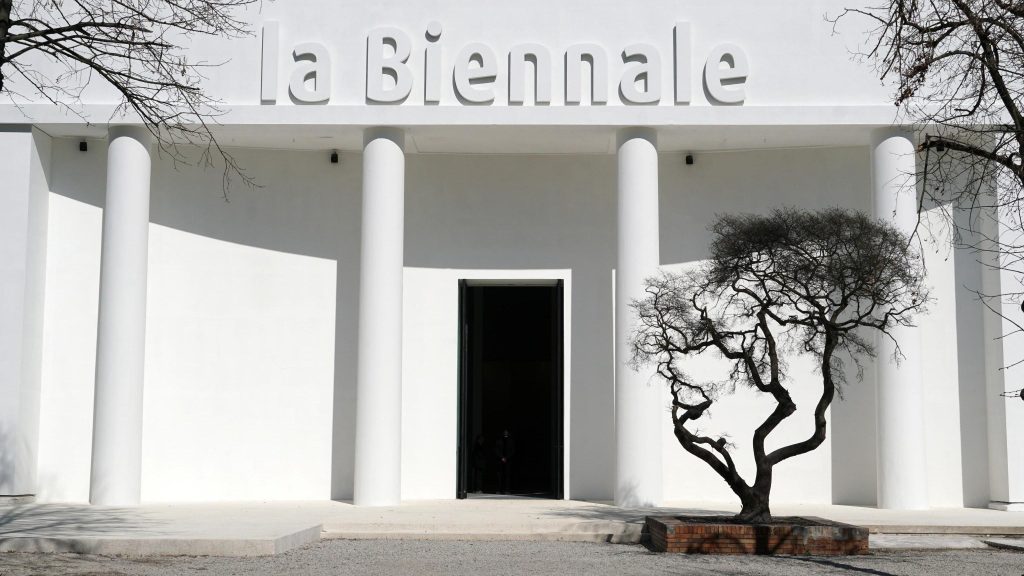
In a move that has thrown the 61st Venice Biennale into uncharted territory, the exhibition’s appointed international jury has collectively resigned just days before the public opening, leaving the institution to delay its usual prize system and replace it with a visitor‑chosen award. The gesture is widely read as a political and ethical intervention, following the jury’s earlier promise that it would not consider artists from countries whose leaders are currently charged with crimes against humanity at the International Criminal Court (ICC) for the exhibition’s top accolades. La Biennale di Venezia has responded by postponing the Golden Lion awards until the final day of the run and scrapping the jury‑based selection process for 2026.
Who stepped down and why
The jury of the 61st International Art Exhibition, titled In Minor Keys, was composed of five internationally prominent curators and art professionals: Solange Oliveira Farkas (jury president), Zoe Butt, Elvira Dyangani Ose, Marta Kuzma, and Giovanna Zapperi. All were selected by the late artistic director Koyo Kouoh, whose tenure as the first Black African woman to lead the Venice Art Biennale has framed this edition as a major moment for decolonial and global‑South perspectives.
Their resignation statement, published via e‑flux Notes and widely circulated through platforms such as Instagram, reads in part:
“As of 30 April 2026, we, the international jury selected by Koyo Kouoh, Artistic Director of the 61st edition of La Biennale di Venezia In Minor Keys, have resigned. We do so in acknowledgment of our Statement of Intention issued on 22 April 2026.”
This links the resignation directly to an earlier document in which the jury declared that it would not “consider artists from countries whose leaders are currently charged with crimes against humanity at the International Criminal Court” for the Golden Lion and related awards.
The Statement of Intention and geopolitical tensions
The 22 April “Statement of Intention” was framed as a moral and curatorial stance, aimed at aligning the jury’s practices with broader questions of state violence and international law. In practical terms, the measure would have excluded Russia and Israel from consideration for the main prizes, reflecting the ongoing war in Ukraine and the situation in Gaza.
The Biennale’s Russian‑pavilion participation has been a flashpoint in the run‑up to the exhibition, with Italy’s government, including Prime Minister Giorgia Meloni, publicly opposing Russia’s inclusion amid war‑related sanctions and diplomatic pressure. This political friction sits alongside longer‑running debates over the role of art biennials in hosting or marginalising states implicated in serious international‑law violations, a conversation that has intensified in recent years.
How the Biennale is responding
In response to the mass resignation, La Biennale di Venezia has announced that the awards ceremony will be postponed from early May to 22 November 2026, the last day of the exhibition. Crucially, the institution has replaced the traditional jury‑led Golden Lion with a new, visitor‑chosen prize, allowing the public to vote for their “favourite project” instead of having a jury‑appointed winner.
“This is consistent with the founding spirit of La Biennale, based on openness, dialogue, and the rejection of any form of closure or censorship,” the show said in a statement. “La Biennale seeks to be—and must remain—a place of truce in the name of art, culture, and artistic freedom.”
Several art‑world outlets have described this turn of events as unprecedented for the 61st edition, noting that the Biennale has effectively suspended its usual system of juried awards in the wake of the geopolitical and institutional tensions surrounding Russia and Israel’s participation. Commentators have framed the resignation less as a protest against the Biennale’s artistic content and more as a challenge to the political and legal conditions under which large‑scale international art exhibitions operate.

Contributor