Indian multidisciplinary artist Sohrab Hura’s presence at the 2026 Venice Biennale marks a pivotal moment for modern Indian art. Known for defying singular focus, Hura mixes photography, film, text, sound, and drawing, making his technique always evolving. His participation underscores both his international standing and the rising importance of multidisciplinary, process-focused art today.
The Artist Who Refuses Categories
Sohrab Hura resists easy classification. Though he started in photography, he gradually added new media, extending rather than abandoning his concepts. As he notes, ‘Each medium adds a new layer rather than being a departure’ (Bhullar, 2025). This is evident in his connected projects: Life is Elsewhere inspired Bittersweet, which led to later works like Look, It is Getting Sunny Outside! (2018). In A Proposition for Departure (2017), he transformed scanned images into sound.
This movement between media defines Sohrab Hura’s outlook. He compares his creative process to cooking—shaped by the audience, the environment, and the resources available. The form, he says, follows the story: ‘The mediums are just ingredients’ (Bhullar, 2025). As a result, his work is constantly reshaped and reinterpreted.
From Documentary to Inner Worlds
The River and Land of a Thousand Struggles (2005–06), one of Sohrab Hura’s early films, was inspired by his passion for documentary filmmaking and by his participation in grassroots initiatives such as the Right to Food campaign. By documenting labour, political struggles, and landscapes, these initiatives investigated social realities in India (Magnum Photos; Experimenter).
Hura eventually turned her attention to more intimate subjects. His later pieces, which explore his relationships, experiences, and emotions, resemble visual journals. Life is Elsewhere (2015), for instance, examines his mother’s struggle with paranoid schizophrenia and his family. Look, it’s getting sunny outside!!! (2018) depicts a period of healing and emotional transformation (imp-art.org).
Politics is not left behind in this shift from documenting the outside world to looking inward. Rather, it presents an alternative perspective. Hura’s research demonstrates the strong connection between individual experiences and more extensive systems. “Everyday acts and larger social structures are inseparable,” he states (Bhullar, 2025).
Narrative as Instability
Sohrab Hura’s opposition to established meanings is a characteristic of his work. His photographs alternate between clear and hazy, dreamy and documentary. He invites viewers to sit with uncertainty rather than presenting a clear narrative. “Linear narratives collapse,” leaving behind fragments, inconsistencies, and unresolved conflicts (Bhullar, 2025). In Lost Head & The Bird (2016–19), personal photos, propagandist images, and found film are intercut into confusing montages. By contrast, The Coast (2019) creates a setting in which meaning continually shifts through juxtapositions of violence and tenderness, as well as fiction and reality (imp-art.org).
Hura’s perspective on power is also connected to his fascination with tales of instability. He frequently refers to intricate, difficult-to-understand structures in India, such as caste, religion, and politics, as “smoke and mirrors.” In a world that frequently views things in black and white, he hopes to rekindle curiosity through his work (Bhullar, 2025).
Medium: Drawing, Film, and Beyond
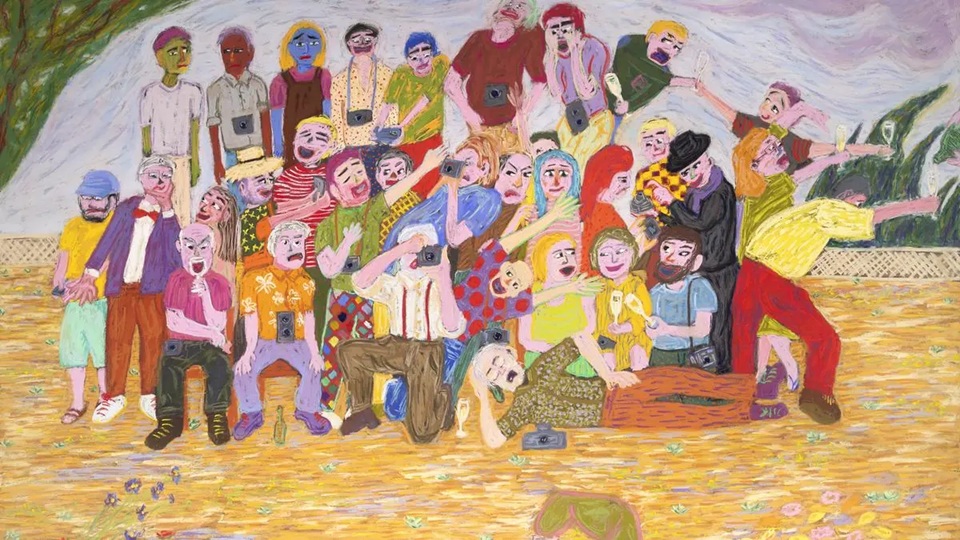
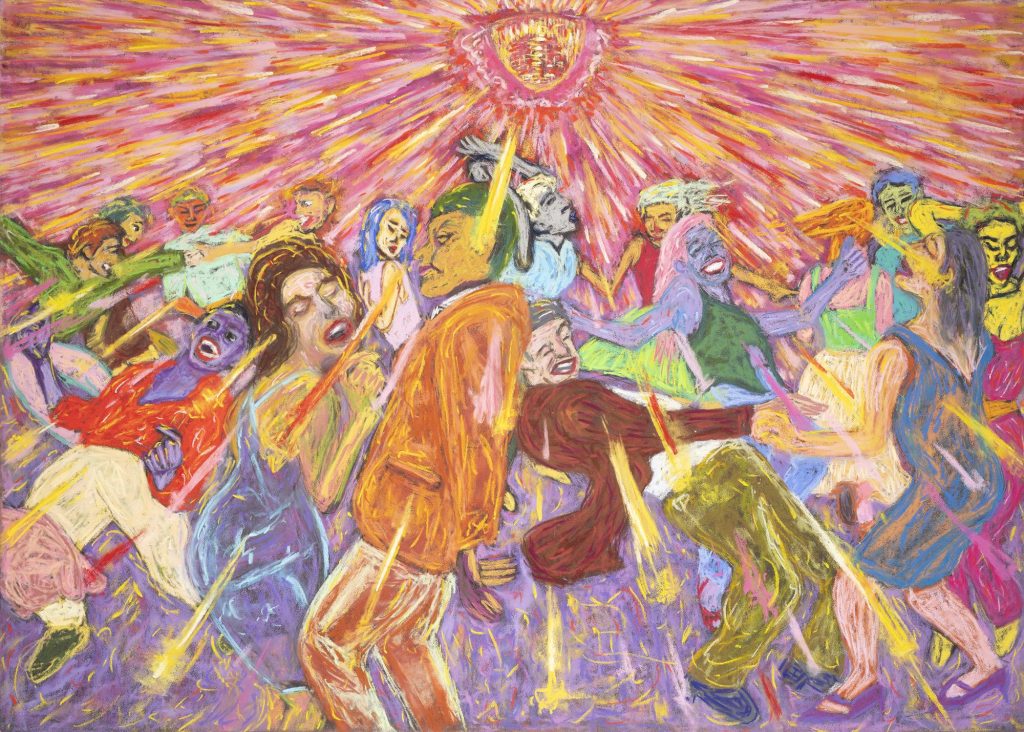
Recently, Hura has emphasised drawing and painting. Projects like Ghosts in My Sleep (2023–ongoing) and Things Felt But Not Quite Expressed (2022–ongoing) use pastels and gouache, reflecting themes shaped by illness and pandemic constraints. These pieces—like journal entries—explore memory, grief, and the everyday. Drawing, unlike photography, gives him a slow, personal process for images to ‘fall apart’ and be recreated (Chakraborty, Vogue, 2025).
Similarly, themes of time, waiting, and healing are explored in his ongoing piece, The Forest (2025–). He created it while strolling through a city forest and spending time in hospital waiting rooms. He investigates the cycles of healing and care with oil paint. The forest represents safety, ambiguity, and limitless opportunities.
The Politics of Everyday Life
Hura continues to pay close attention to broader social and political themes, even as his work becomes more intimate. He reacts subtly to shifts in Indian politics, such as the emergence of majoritarianism and media domination. He addresses situations arising from monitoring and self-censorship through metaphor, broken narratives, and ambiguity rather than straightforward critique.
Hura’s observations on television images—from Doordarshan broadcasts to the visual culture of the 1990s—illustrate how the media affects people’s perceptions. His art has been greatly influenced by early exposure to images of violence, propaganda, and myth. It has caused him to doubt singular narratives and notions of “truth” (Hura, 2017 essay).
An unwillingness to become an expert in a single medium lies at the heart of Hura’s work. He states, “I cannot afford to try and have authorship over any language over time,” implying that being overly strict can result in stagnation. He views working in many ways as a means of persevering through change, uncertainty, and his own limitations. His writings are based on the idea of being sensitive, adaptable, and open. Hura’s work, whether in drawings, films, or photographs, constantly repositions itself, evading closure and allowing fresh interpretations.
Toward Venice
Participating in the 2026 Venice Biennale puts Hura’s work in a global dialogue on the creation of images and narratives in the modern day. His work is a powerful illustration of multidisciplinary activity, rooted in personal experience but linked to global concerns.
Hura’s exploration of “in-between spaces”—between various media, realities, individual recollections, and shared history—is probably going to continue in Venice. His work is particularly significant in the complex and unpredictable times of today because of his embracing of change and reluctance to settle.
The work of Sohrab Hura exists amid contradictions rather than attempting to resolve them. He effortlessly switches between concepts and media, challenging audiences to reconsider how narratives are presented, how visuals function, and how meaning is created. More than just a prize for his work, his exhibition at the Venice Biennale demonstrates the power of multidisciplinary thought in contemporary art.
Nothing remains the same in Hura’s universe. Stories evolve, images shift, and meanings remain flexible. Perhaps this is where art is most honest, as he suggests—not in providing solutions, but in constantly posing queries.
Reference
Bhullar, Dilpreet. “Creating art is like the everyday act of cooking: Sohrab Hura.” Frontline, 2025.
Magnum Photos. Artist Profile: Sohrab Hura.
Experimenter. Sohrab Hura – Artist Biography.
Chakraborty, Rohit. “Sohrab Hura’s art is so universally relatable that he won a very prestigious prize for it.” Vogue India, 2025.
imp-art.org. Sohrab Hura – Profile.
Jalan, Maanav. “What I thought was a tree was a forest: Sohrab Hura on his experimental practice.” STIRworld.
Sohrab Hura on the journeys that made him a photographer. (Artist essay, 2017).
The Forest (2025–ongoing), Things Felt But Not Quite Expressed (2022–ongoing), Ghosts in My Sleep (2023–ongoing). Artist statements.

Contributor