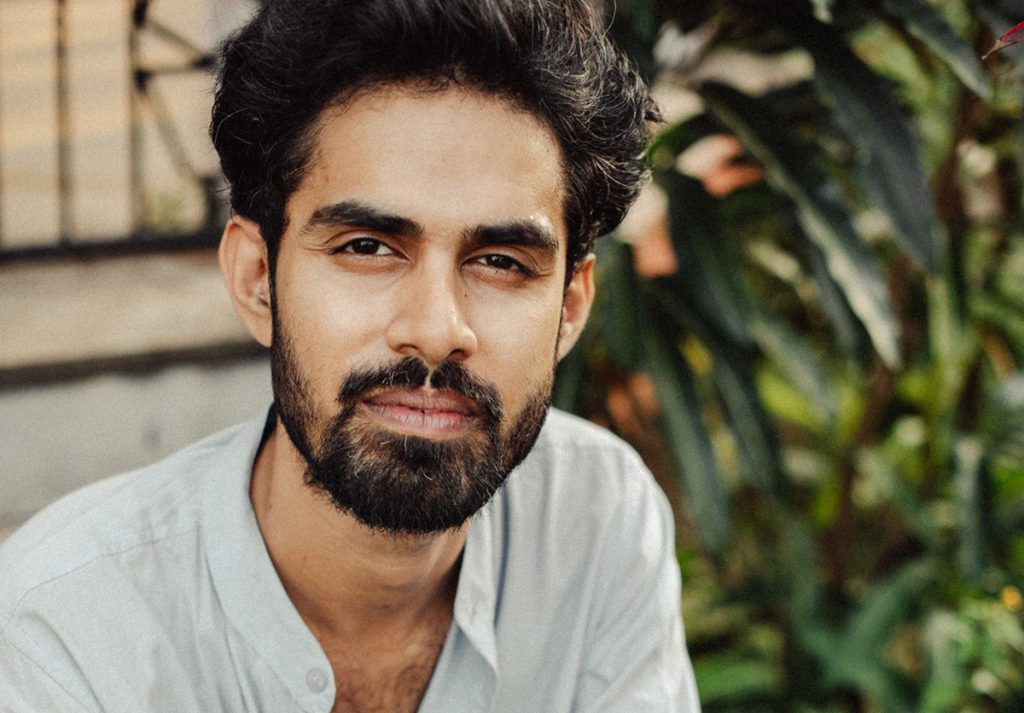
In a world where high-quality design often comes with sky-high price tags, Akshita Mangal is flipping the script. With an MBA in HR from IMI Delhi and no formal design background, she co-founded FountainEarth in Gurugram out of sheer frustration: the lack of well-crafted leather bags and belts that deliver premium quality without breaking the bank for middle-class buyers like herself.
Partnering with Jyoti, Akshita learned the ropes hands-on—collaborating with artisans, sourcing materials, and iterating based on real customer feedback. Today, their fully bootstrapped, Startup India-recognized brand serves over 10,000 customers in 30+ countries, boasts 65+ design patents across 35 nations, four registered trademarks in India, and even earns nods from the Government of Punjab for institutional gifting.
As part of Abir Pothi’s DTalks series, Akshita Mangal open up about her creative process, projects and design philosophy.

Q1. How would you describe your signature design aesthetic, and how has it evolved while working in India?
Akshita Mangal: I’d describe it as the discipline of removal. The best version of any FountainEarth product is the one where nothing more can be taken away without losing something essential.
I learned this by watching our artisans. Early on, I designed a piece with a curved edge — it looked good on paper. But when our artisans started stitching it, the thread fought the leather at every curve. They were spending three times the effort on that one edge compared to the rest of the piece. Nobody complained. But watching their hands, I understood immediately: I had made their job harder, and in doing so, I had made the product weaker. A seam on a curve will always be the first to show wear.
From that day, we design around straight lines as much as possible. Not for aesthetic reasons — for structural ones. The stitch that doesn’t fight the material is always the cleanest and the strongest. What people often read as minimalism in our work is, honestly, engineering.
The fountain pen nib is at the heart of our design language — and I want to be clear that it’s not just a logo. The nib stands for intention. When you write with a fountain pen, you commit. You can’t delete. You have to slow down and mean what you say. We try to build that same quality into every product: choose it carefully, use it for years, let it earn its character.
Q2. What influences and inspires your current work?
Akshita Mangal: Honestly, the biggest influence on how I think about products isn’t a designer or a design movement. It’s my childhood.
I grew up in a middle-class family where money was spent carefully. Nothing was bought on a whim, and nothing was thrown away without good reason. If you came to my home today, you’d still find my childhood dolls and toys — intact, in working condition. My own children play with them now. That’s not nostalgia. That’s evidence of how things used to be made.
What strikes me, holding those toys as an adult, is how different their build quality is from what we see today. They were made to last — not out of idealism, but because the families buying them couldn’t afford to replace them. That simple calculation — make it right once, make it last — is the foundation of everything I believe a product should be.
FountainEarth exists for families like the one I grew up in. People who spend thoughtfully and deserve objects that reward that care for years, not seasons.
Beyond that, the fountain pen as a culture genuinely fascinates me. There’s a discipline to it that feels completely absent from most of modern life. You slow down, you commit, you can’t take it back. I find that deeply instructive — and I try to bring that same sense of deliberateness to everything we make.
Q3. Could you walk us through your creative process? How do you move from initial concept to final execution?
Akshita Mangal: It always starts with a real problem — one I’m living, not one I’ve imagined.
The clearest example is FountainEarth itself. My husband was at a consulting firm — formals every day, travelling constantly. I wanted to gift him something he’d use daily and keep for years. So I went to the mall and walked through the stores you’d expect: Montblanc, Tumi, the usual names. And I stood there staring at a laptop bag priced at Rs.50,000. A belt at Rs.30,000.
I wasn’t angry at those brands. I was frustrated by the gap. Because my husband deserved that quality. And so did every other professional in India working just as hard, travelling just as much — with a middle-class budget that the luxury industry had simply decided not to speak to. I walked out of that mall thinking: someone should make this properly, at a price that’s honest. It took me a while to accept that someone was going to have to be me.
From that frustration, the process goes to material. We work with certified sustainable materials — GRS Recycled Leather, LWG Natural Leather, USDA Biobased Bamboo and Cactus composites. Each material has its own logic and its own limits. I never start with a visual idea and hunt for a material to match it. That’s the fastest way to make something hollow. The material leads.
Then comes the longest part: working through the design with our artisans in Gurgaon. This is where what looks good on paper meets what actually holds. Products I loved as sketches have come back from sampling needing a complete rethink. The artisans are always right. The test I apply before anything moves forward is simple: would I use this myself, every day, for five years, without wanting to replace it? If I hesitate at all, it goes back.
Q4. Your work often involves collaborations with artisans. What draws you to these partnerships, and how do they enrich your practice?
Akshita Mangal: I came to this with an HR background, which means I’ve always thought about people before I thought about products. That turned out to be the most useful instinct I brought to this work.
Our artisans in Gurgaon are not vendors. They are collaborators — and they have saved us from some genuinely expensive mistakes.
The clearest example: we were making a laptop bag for a corporate client. The brief had a main compartment, a zipper pocket inside, and a trolley strap on the back. Midway through sampling, the client came back and asked for an additional zipper pocket on the outside of the back panel, over the trolley strap. Reasonable enough on paper.
Our artisans said: we can make it, but it won’t work. Two pockets on the same panel, competing for the same depth of space — whatever goes in one compresses what’s in the other. They didn’t argue about it. They just showed us, with their hands, exactly what would happen when both pockets were full.
We went back to the client, explained the constraint honestly, and redesigned: an open pocket on the front panel inside the bag, and the zipper pocket on the outside back. Both accessible, neither compromising the other. The client agreed. The bag worked.
That is what craft knowledge actually means in practice. Our artisans saved that product from looking right and working wrong — which is the most costly kind of mistake a young brand can make. I try never to forget that.
Q5. Looking back, which project represents a significant turning point? And among recent work, what are you most proud of?
Akshita Mangal: The turning point wasn’t a success. It was a stretch of days — quite a few of them, early on — when there were simply no orders. Nothing. We had a product we believed in, genuine intent, reasonable pricing. And the cart just sat empty.
That kind of silence asks a specific question, and it asks it quietly: are you actually solving a problem anyone has? It’s uncomfortable in a way that loud failure isn’t, because there’s nothing to point to and fix.
We didn’t make a big decision to push through. We just chose to show up the next day. We introduced pens at a lower price point — something someone could buy as their first FountainEarth product without a leap of faith. We cleaned up the checkout process on the website. Unglamorous work. But a few months later, orders started coming, and those pens are among our bestsellers today.
What I learned from that period: there is space for every brand that is building something real. You won’t always be able to see it. But if you keep showing up, you find the thing that clicks — and you realise it was only visible from that far into the journey.
What I’m most proud of right now is the Government of Punjab choosing FountainEarth products for institutional gifting. It wasn’t something we pitched for in the usual way. It came through the quality of the work reaching people who then recommended it. For a bootstrapped brand, that’s the only kind of validation that can’t be manufactured — and that’s why it means more to me than anything else.
Q6. What unique challenges and opportunities have you encountered as an emerging designer in India?
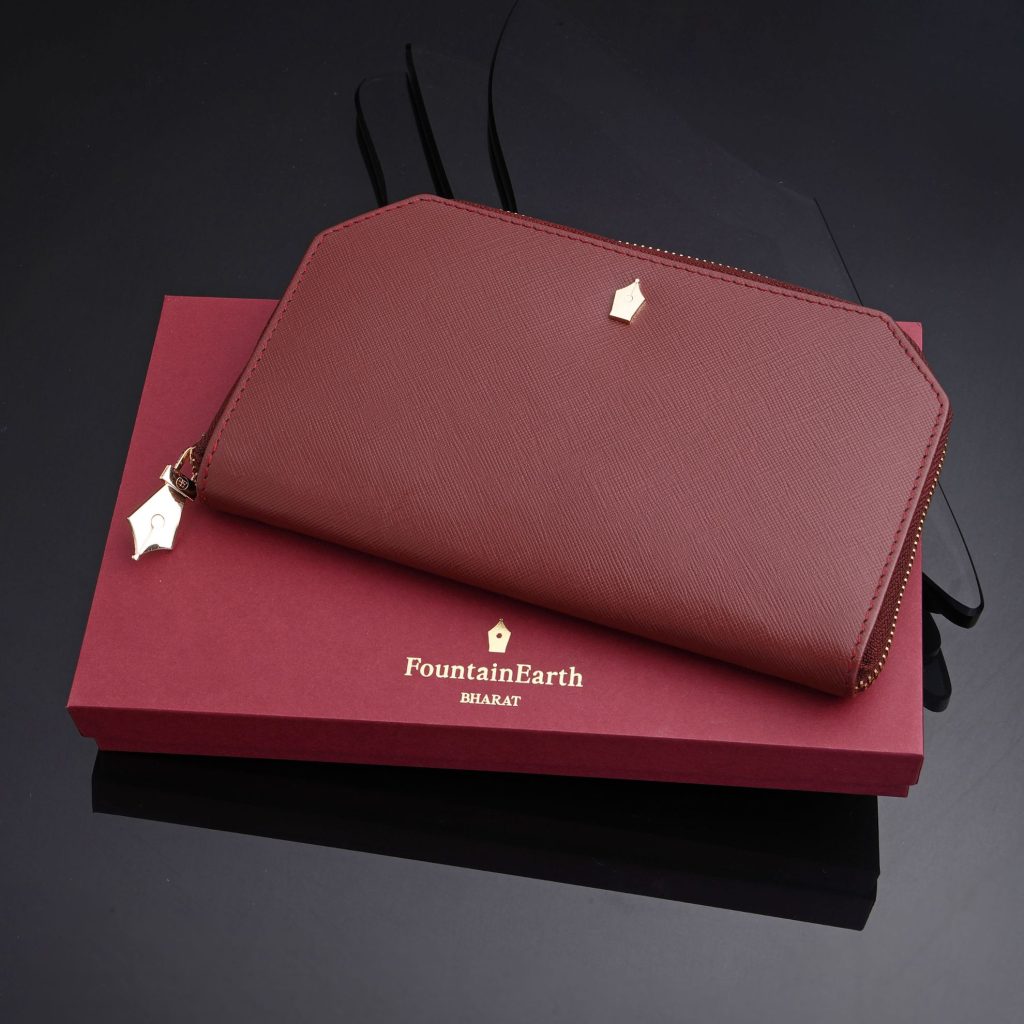
Akshita Mangal: The honest challenge is this: when you are a premium Indian accessories brand, you are asking someone to pay Rs.4,000 for a wallet from a name they haven’t heard of — when they could spend the same on a foreign name their friends will immediately recognise. That’s not a product problem. It’s a trust problem. And there’s no shortcut through it.
Our belts taught us this the hard way. Early customers came back with real complaints — wrinkles in the leather, pasting that didn’t hold, buckles that felt heavier than expected. These weren’t hostile reviews. They were people who had paid for something and trusted us enough to say where it had fallen short.
I didn’t know, at the start, how much lived inside the word ‘leather.’ Dozens of types, different price points, different behaviours over time, different applications. That customer feedback sent us back into all of it with far more seriousness. We experimented with materials, reworked stitching, and changed the buckle mould. I won’t tell you we’ve solved everything — we haven’t. There are still things we’re working on every day. But I think that’s the right relationship to have with your product. The day you decide you’ve figured it out is the day you stop getting better.
The opportunity — and I think it’s genuinely a generational one — is that India’s relationship with its own craft and design is shifting. There’s a pride in Made-in-Bharat that I haven’t seen before in my adult life. We have 10,000+ customers across 30+ countries, rated 4.8/5 across verified reviews. The demand for quality from Indian brands, at an honest price, is real. The work now is removing every friction that stands between that demand and our door.
Q7. How do you approach sustainability in your designs, considering India’s traditional wisdom and contemporary environmental challenges?
Akshita Mangal: The first thing I’ll say is: I don’t use the word ‘sustainable’ without documentation to back it up. That’s a personal rule.
The leather goods industry is driven by demand, and unfortunately the demand is not primarily for certified materials. A product made with non-LWG certified leather costs at least 20% less to produce. That gap is real. Every supplier we’ve worked with knows it, and most brands quietly take that saving.
We never have. Not because our customers can tell the difference by touch — most can’t. But LWG certification means the leather is traceable: you can follow it back through the supply chain and know exactly how it was produced, what chemicals were used, how the people who made it were treated. Without that, ‘natural leather’ is just a claim. With it, it’s a verifiable fact.
We certify everything — GRS for recycled leather, LWG for natural leather, USDA Biobased for our bamboo and cactus composites, OEKO-TEX for chemical safety, SA8000 for fair labour, ZDHC for supply chain standards. We don’t ask anyone to take our word for it.
I’ll also be honest: we still get feedback on pricing. Customers ask why our products cost what they do. The answer is always the same — part of what you’re paying for is invisible to you personally, but it’s not invisible to the planet or to the people in the supply chain.
I think the industry has a long way to go on consumer awareness. There’s no immediate personal benefit to an individual from certified materials. The benefit is collective. Asking people to pay for something collective, in a market that’s trained them to look for individual value, is genuinely hard. But I don’t see another way. And we’re not going to stop trying.
Beyond certification, the most honest sustainability statement we make is our Lifetime Service Warranty. We repair products rather than replace them. That’s the oldest sustainability principle there is — make it well enough that it deserves to last.
Q8. What’s your most exciting recent discovery that’s influencing your current thinking?
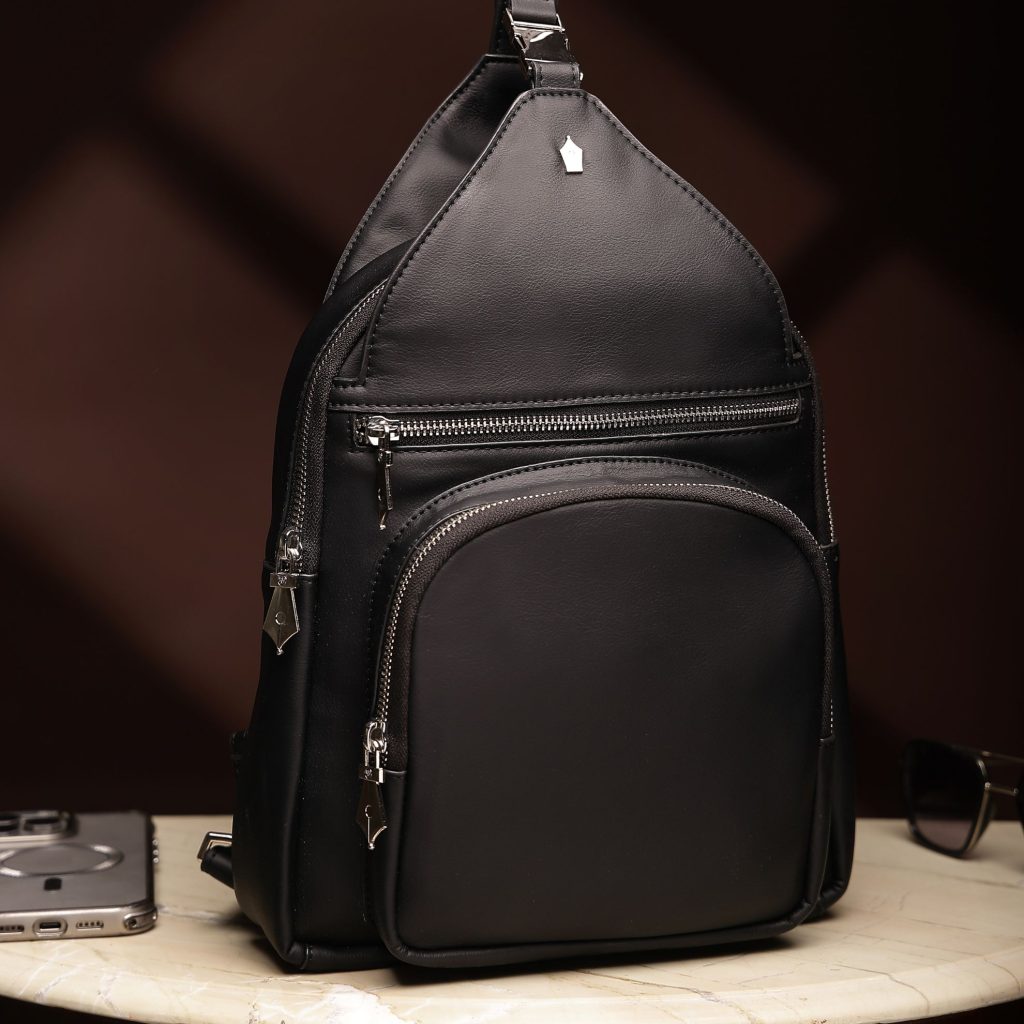
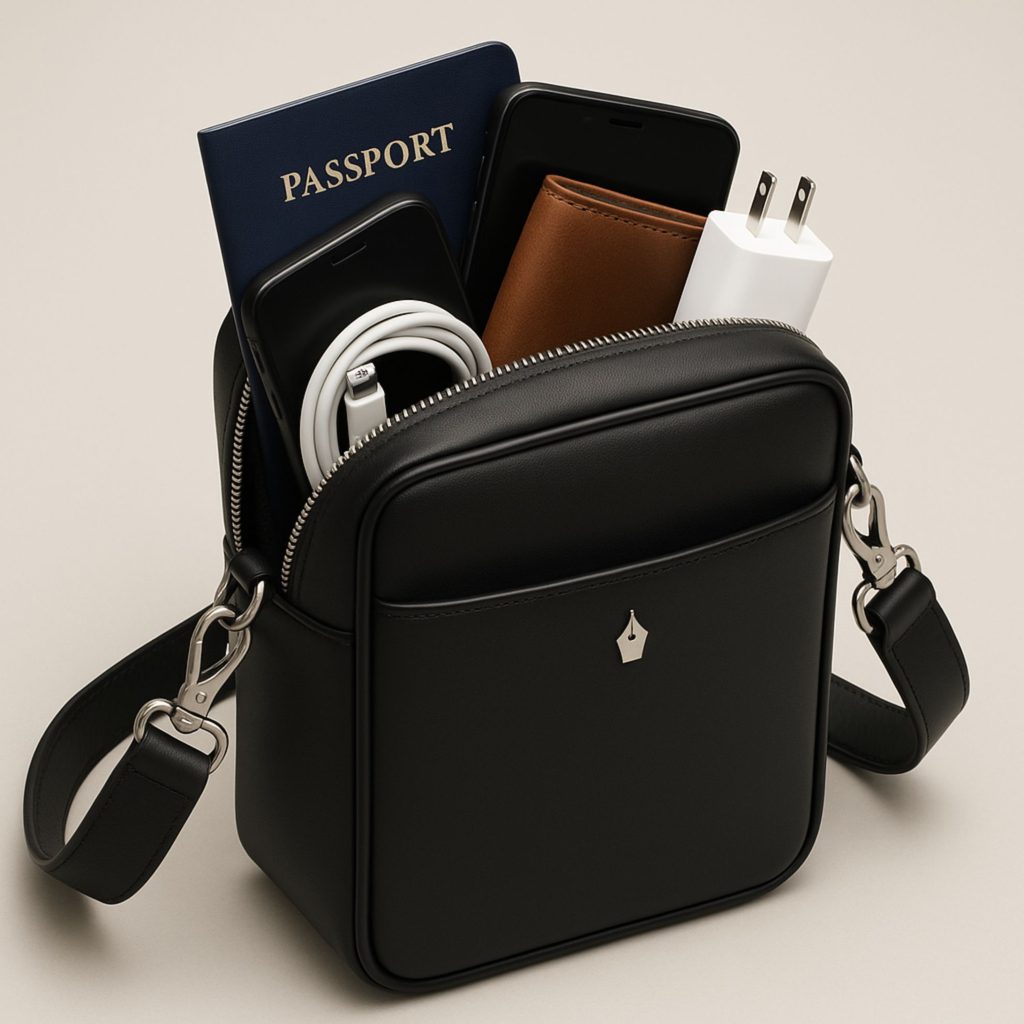
Akshita Mangal: It didn’t come from a design book. It came from our corporate clients. For a long time, we were designing laptop bags with most of our attention on the exterior — the silhouette, the leather, the finish, how it looked walking into a room. The interior was considered, but it was an afterthought.
Then we started working more closely with the professionals actually using these bags day to day, and what they told us consistently was that the interior was where the bag either worked or didn’t. A zipper pocket that’s slightly too tight. No pen slot. A compartment just a centimetre too narrow for a charger. None of this shows up in a product photo. But it absolutely determines whether someone reaches for that bag every morning or quietly stops using it.
That shifted how I think about the whole category. The exterior is what the world sees — it must be minimal, clean, considered. But the interior is what the person who owns it lives with every single day. Those two things need different design thinking entirely, and giving each its proper attention is harder than it sounds.
It’s become the question I keep coming back to right now: what does the outside promise, and does the inside actually deliver it?
Q9. How do you build visibility and reach potential clients — what’s worked best for you?
Akshita Mangal: I’ll tell you what’s actually worked rather than what sounds good. We assumed Amazon would be a natural fit — brand registry, large customer base, infrastructure already there. In practice, we’re still waiting to see its full potential for us. A platform built for price comparison makes it genuinely difficult for a brand whose value lives in material quality and design story. You’re always one price filter away from being invisible.
Our own website is working. It gives us space to tell the full story — the materials, the certifications, the craft — without competing against products that share none of those standards. That’s become the anchor of everything.
The most reliable signal we have is a repeat purchase rate of 10–11% within 90 days. When someone comes back that quickly, it’s not because of marketing. It’s because the product was delivered. That’s the foundation. Everything else is about getting more people to that first experience.
What we’re actively building toward now is presence across AI discovery — tools like ChatGPT and Claude, and agentic storefronts that are beginning to change how people find and buy things entirely. When someone asks an AI to recommend a premium sustainable leather bag made in India, we want FountainEarth to be the answer. This is a different kind of visibility — one that carries a different kind of trust. We’re early to it, and that feels like the right place to be.
Q10. What are the crucial dos and don’ts for young designers trying to establish themselves in India?
Akshita Mangal: The most important thing I’ve learned — and I want to be careful how I say this, because I do have mentors I genuinely value — is that every business is singular. The advice that worked for someone else was shaped by their product, their timing, their customer. It doesn’t transfer cleanly.
Early on, I’d hear what had worked for another founder and feel pressure to apply it to our pricing, our channel strategy, our product choices. Sometimes it helped. Often it didn’t — not because the advice was wrong, but because it was wrong for us.
What I’ve learned to do is separate two kinds of advice. On tools and operations — which shipping partner, which content format, how to structure a performance marketing campaign — I listen carefully and adapt quickly. These are solved problems. Someone else has already made those mistakes. But on business decisions, product choices, brand direction — the only real teacher is the market. You have to execute, observe honestly, and adjust. You can’t think your way to what works. You have to build your way there.
A few specific things I’d tell young designers:
Protect your work before you show it. Register your designs. It sounds administrative and it’s easy to defer. I deferred it and it cost us unnecessary anxiety. Global registration is more accessible than most people think. If what you’ve built is genuinely yours, protect it first.
Take a position and hold it. The middle ground — products that are neither truly premium nor genuinely accessible, neither clearly traditional nor contemporary — is the most crowded and least memorable place to build. The brands that last have a clear point of view they don’t negotiate away.
And invest in your relationships with artisans — not as vendors, but as the people in the room who know things you don’t. They are the most generous teachers I have encountered in this work.
Q11. As you look ahead, what kind of projects or directions would you like to explore?
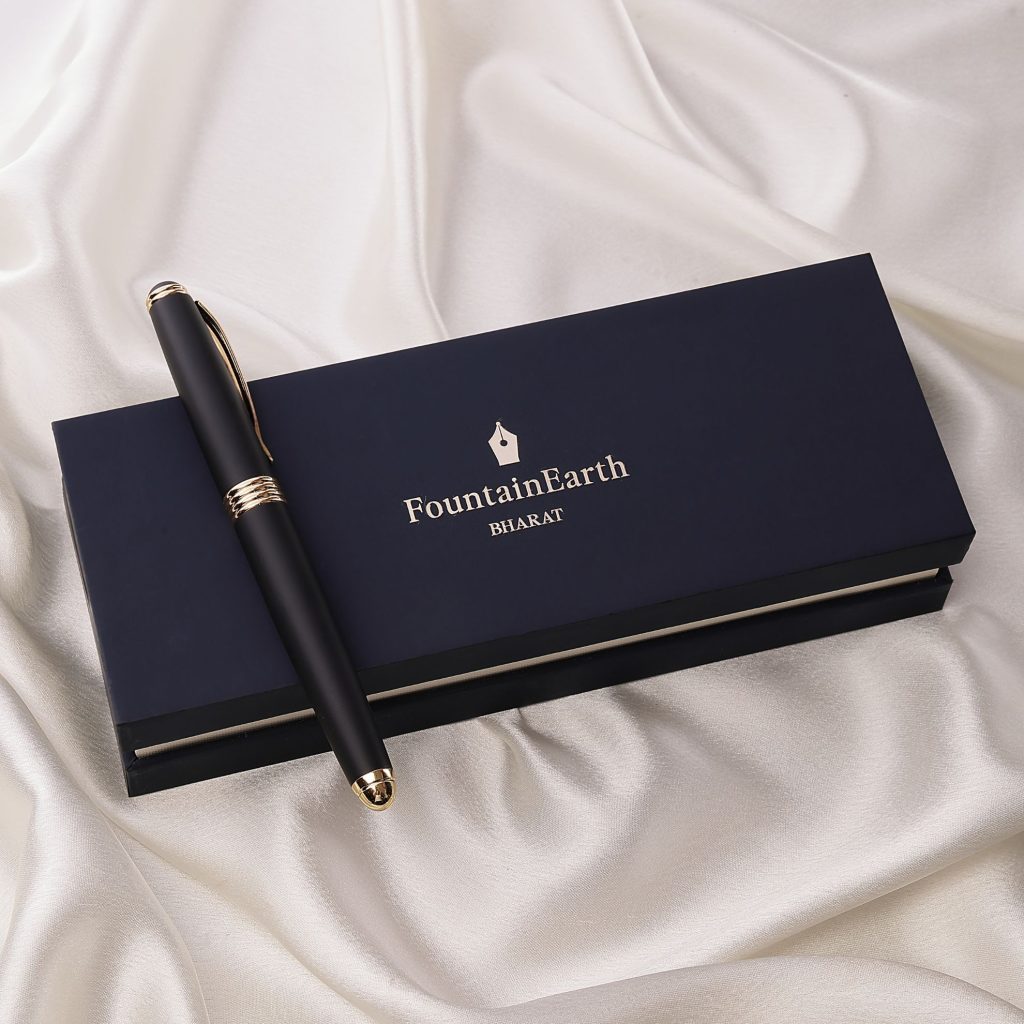
Akshita Mangal: The pen. Everything FountainEarth has built — the nib as our design language, the commitment to precision and intention — has been pointing toward a writing instrument that carries the same standard as our leather goods. The fountain pen nib is the soul of this brand, and there are things we haven’t yet built around it. That absence is something I think about more and more.
But the product I think about most — the one I haven’t made yet and am still working through — is a bag for the working woman.
Not a bag designed around an idealised version of her day. A bag designed around the actual shape of it. In the morning, she needs to walk into a board meeting with a laptop, an iPad, chargers, documents. By evening, that same bag might be carrying groceries, a gift, a toy for her child. She doesn’t get to switch bags between those two versions of her life. She is the same person in both — and she deserves a bag that understands that, without asking her to choose.
I haven’t made it yet because I don’t want to get it wrong. A bag that tries to serve both contexts and fails at both is worse than one that honestly serves one. Getting the interior architecture right — a laptop compartment and a family’s evening needs coexisting without compromising each other — is a genuinely hard design problem. The exterior needs to be considered enough for a boardroom and unfussy enough for an evening errand.
It’s the product I think about most. Because the woman who needs it isn’t a niche customer. She is one of our customers. And no one has made it for her yet at a price she should have to pay.
Q12. For aspiring designers looking to make their mark in India’s design landscape, what wisdom would you share?
Akshita Mangal: Your background is not your limitation. It’s your material. I have an MBA in HR. I am not a designer. Everything I know about making things, I learned by making things — by sitting with material until it taught me its logic, by listening to artisans who knew what I didn’t, by building products and having customers tell me, through their choices and their feedback, what was working and what wasn’t. That education was uncomfortable and specific and I wouldn’t trade it for anything.
The design world places a lot of value on formal training and established lineage. I understand why. But some of the most interesting work coming out of India right now is from people who brought a completely different knowledge set to the question of making. An engineer who understands structure. A historian who understands material. A person from HR who won’t stop asking why a product isn’t living up to what it promised.
Cover Image: Signature Metal Rollerball Pen | Image Credit: FountainEarth
Akanksha is an Associate Editor at Abir Pothi, writing on contemporary art and creating engaging videos that highlight artists and make art accessible to wider audiences.